Colorado treats dog bite claims differently depending on how serious the injury is. A bite that causes serious bodily injury follows a strict-liability path under state law. The injured person does not need to prove the owner knew the dog was dangerous. A less severe bite or a non-bite attack requires a different legal analysis.
An Aurora dog bite lawyer sorts out which path fits the facts and what evidence each one requires. Legal The Outlaw Injury Attorneys represents dog bite and dog attack victims throughout Aurora and the Denver metro area. We handle claims against dog owners, review applicable insurance coverage, and investigate property-related liability when the attack occurred on someone else’s premises.
To talk through your situation at no cost, call (303) 351-2567. We take calls around the clock.
When Does Colorado’s Strict-Liability Dog Bite Law Apply?
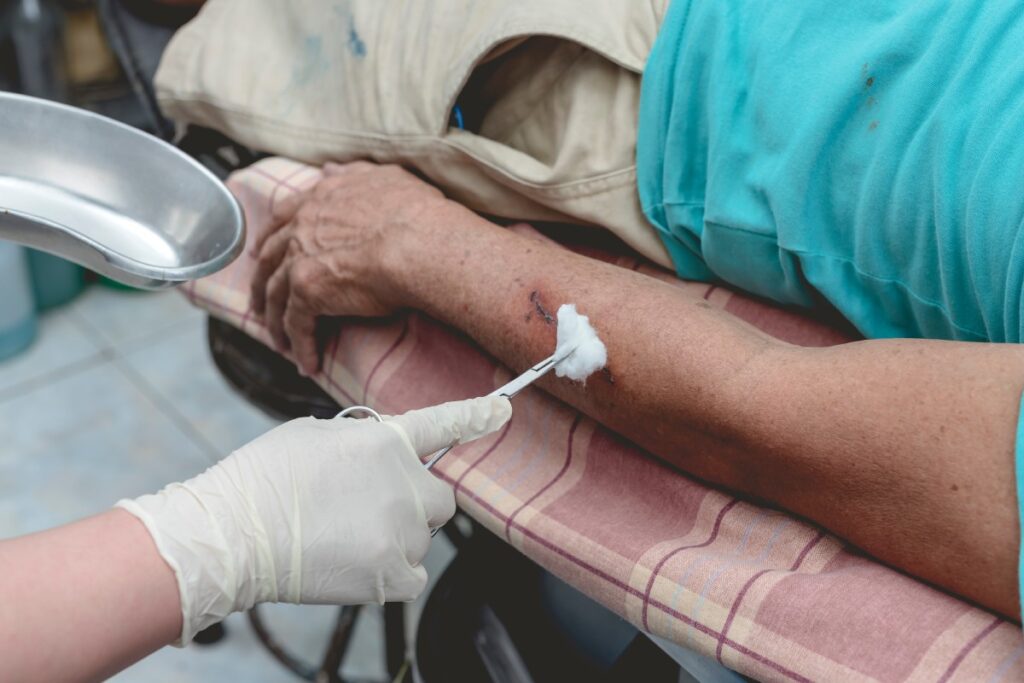
Colorado’s dog bite statute, C.R.S. § 13-21-124, does not cover every dog injury. The strict-liability route requires an actual bite, serious bodily injury or death, and lawful presence on public or private property. The injured person must also show ownership or control and causation.
When those elements line up and no statutory exclusion applies, the injured person may recover economic damages without proving the owner had prior knowledge of the dog’s dangerous behavior. That is a significant advantage over claims that require proof of prior vicious tendencies.
But the statute draws a clear line at “serious bodily injury.” Not every bite crosses that threshold, and the distinction shapes the entire claim.
What Does “Serious Bodily Injury” Mean Under Colorado Law?
Colorado’s civil jury instructions define serious bodily injury to include injuries involving a substantial risk of death, a substantial risk of serious permanent disfigurement, a substantial risk of protracted loss or impairment of a body part or organ, fractures, or second- or third-degree burns.
For dog bites, permanent facial scarring, fractures in the hand or forearm, or nerve damage that causes protracted functional loss may each meet the threshold. A deep laceration requiring stitches does not automatically qualify simply because it required emergency treatment. The actual injury controls the analysis.
That medical determination often becomes the most important early question in an Aurora dog bite claim. Call (303) 351-2567 to discuss whether your injury meets the statutory standard.
What Defenses Does Colorado’s Dog Bite Statute Allow?
The strict-liability statute contains specific exclusions that function as affirmative defenses. The defendant bears the burden of proving that one applies. Evaluating which exclusions the facts actually support helps a dog bite claim lawyer in Aurora, Colorado, determine the strength of the case early.
Colorado’s statute bars the strict-liability claim in circumstances that include:
- The injured person was unlawfully present where the bite occurred
- The property displayed certain posted warnings about the dog
- The injured person was knowingly provoking the dog
- The dog was a police or military animal performing official duties
- The injured person was an animal-care professional performing duties related to the dog
Each exclusion requires specific facts. An insurer who raises the knowingly-provoking exclusion must support it with evidence showing the injured person’s specific conduct. A dog that reacts to a perceived threat is not the same as a person knowingly provoking an attack.
How Does the Knowingly-Provoking Exclusion Work?
The statutory exclusion requires proof that the injured person knowingly provoked the dog. A child who reaches toward an unfamiliar animal or a pedestrian who walks past a fenced yard does not automatically fall within that exclusion. The factual question is whether the injured person’s specific conduct amounted to knowingly provoking the animal under the statute.
Insurers sometimes raise this defense broadly. The statutory language is narrower than a general argument that the dog felt threatened.
What If the Injury Does Not Meet the Serious Bodily Injury Threshold?
A bite that falls below Colorado’s serious-bodily-injury standard does not eliminate every legal option. The dog bite statute expressly preserves other causes of action. Colorado’s civil jury instructions also recognize additional domestic-animal liability theories outside the strict-liability route.
Those claims may require different proof. The investigation may need to establish what the dog owner knew about the animal’s tendencies, whether prior incidents or complaints existed, and whether the owner failed to use reasonable care. A dog that previously lunged at neighbors or repeatedly escaped from a yard may provide evidence of dangerous tendencies or notice, depending on the specific facts.
This distinction matters in Aurora, where Aurora Animal Services records may document prior complaints or enforcement history involving the same dog.
What About Dog Attacks That Do Not Involve an Actual Bite?
Colorado’s strict-liability provision specifically covers injury or death from being bitten by a dog. A dog that knocks someone to the ground, causes a cyclist to crash, or injures someone during a charge without biting presents a different liability question.
Other negligence principles may apply depending on the owner’s conduct, the dog’s known tendencies, and how the injury occurred. A dog attack injury lawyer in Aurora, CO, evaluates non-bite injuries under the legal theory that best fits the facts rather than forcing them into a statute that does not apply.
How Do Aurora’s Dog Control Rules Affect a Bite Claim?

Aurora requires every dog leaving its owner’s property to stay on a leash no longer than 10 feet in length, held by someone who is physically able to control the animal. Dogs on their owner’s property must remain contained. Aurora’s Animal Protection Officers respond to animal bites and aggressive-animal complaints.
A leash violation does not automatically prove civil liability. But when a dog on an overlong leash outside an Aurora apartment complex bites someone on the adjacent sidewalk, the violation becomes relevant evidence about whether the owner exercised reasonable control.
Aurora also repealed its previous breed-specific restrictions effective January 2025. The city now regulates dangerous dogs based on behavior rather than breed. Colorado’s civil dog bite statute similarly turns on the statutory elements and applicable defenses, not on the animal’s breed.
Which Legal Path Applies to an Aurora Dog Bite Claim?
Colorado dog injuries do not all follow the same legal route. The path depends on what happened, how severe the injury was, and where the attack occurred. An Aurora dog bite attorney evaluates which route fits the facts before building the case.
| Legal Path | When It Applies | Key Question |
| Strict liability under § 13-21-124 | Actual bite causing serious bodily injury or death | Do the statutory elements apply, and does a statutory exclusion block the claim? |
| Other dog-owner liability | Less severe bite or circumstances outside the strict-liability route | What did the owner know about the dog, and did the owner fail to use reasonable care? |
| Non-bite dog injury | Dog causes injury without actually biting | Did negligent control or another actionable failure cause the injury? |
| Premises liability | A landowner’s responsibility for property conditions or circumstances also becomes relevant | What duty did the statutory landowner owe under the Premises Liability Act? |
When a dog bite occurs at an Aurora apartment complex or rental property, the claim may involve both the dog owner and the party responsible for the premises. The question of a property owner’s responsibility depends on that party’s statutory landowner status, knowledge, and duty under the applicable visitor classification.
What Evidence Strengthens an Aurora Dog Bite Claim?
The evidence that matters depends on which legal path the claim follows. A strict-liability claim under § 13-21-124 requires proof of ownership, an actual bite, serious bodily injury, lawful presence, and causation. A negligence-based claim adds an investigation into what the dog owner knew before the attack.
Because these claims follow different proof requirements, the investigation benefits from gathering records that address both paths early:
- Medical records documenting the initial injury, surgical treatment, and scar progression over time
- Aurora Animal Services records that may document the reported incident, prior complaints, or enforcement history
- Photographs of the injuries taken at regular intervals to track healing and scarring
- Witness accounts describing the dog’s behavior and the owner’s control during the attack
- Homeowners or renters insurance information identifying applicable coverage
Scar documentation deserves particular attention. A facial bite may not reveal its full extent for months. Photographs taken over time help establish whether the injury meets the substantial-risk-of-serious-permanent-disfigurement standard.
What Compensation Does Colorado Allow After a Dog Bite?
The statutory strict-liability route under § 13-21-124 expressly provides economic damages. Those losses include documented medical expenses and lost income attributable to the bite.
The statute also expressly preserves other causes of action. When additional legal theories apply, the available damages may expand. For claims where non-economic damages are legally available, Colorado’s general cap for covered civil actions filed on or after January 1, 2025 is $1.5 million, with inflation adjustments beginning in 2028.
Colorado’s civil jury instructions treat physical impairment and disfigurement as separate damage categories. That distinction matters after a dog bite because lasting facial scars, nerve damage, or reduced hand function each create their own documented loss.
Does Homeowners or Renters Insurance Cover a Dog Bite?
Homeowners liability policies commonly include personal liability and medical-payments coverage that may extend to injuries caused by the policyholder’s pet. Renters insurance commonly provides personal-liability coverage as well, though specific pet-related provisions vary by policy.
Coverage is not automatic. Some policies exclude specific animals or impose restrictions. Others set liability limits that fall short of documented losses after a severe attack. Whether the insured person meets the policy’s definition of the dog owner also matters when custody of the dog was informal.
When Does an Aurora Dog Bite Claim Benefit From a Lawyer?

The decision points that make a dog bite claim difficult to handle alone are specific to this area of law.
The insurer may dispute whether the medical evidence crosses the serious-bodily-injury threshold, which would shift the entire claim to a different legal track with different proof requirements. Or the dog owner may raise a statutory exclusion, like knowingly provoking, that requires careful factual rebuttal.
Legal representation adds the most practical value when the insurer challenges the severity classification, when the applicable insurance coverage is unclear or excluded, when the attack occurred at a rental property where a separate landowner may share responsibility, or when the injury caused permanent scarring or functional impairment requiring documentation over months.
Our Aurora personal injury attorneys review the medical records against the statutory threshold, investigate prior animal-control history, and examine every applicable insurance policy. Our Colorado injury attorneys also evaluate whether additional legal theories beyond the strict-liability statute strengthen the claim.
How Long Do You Have to File an Aurora Dog Bite Claim?
Colorado’s general tort limitation gives injured claimants two years to file most dog bite and dog attack claims. That period is shorter than the three-year deadline for motor vehicle injury claims.
The practical concern in a dog bite case is that important evidence has its own shelf life. Aurora Animal Services records, veterinary or licensing records tied to the dog, and witness accounts of the dog’s earlier behavior all become harder to obtain as months pass.
Scar progression also requires documentation over time. A claimant who waits too long may lose the ability to show how the injury developed after the initial treatment. Claims involving other legal theories or unusual defendants may carry different timing requirements.
FAQs for Aurora Dog Bite Claims
Can I Bring a Claim if the Dog Owner Is a Friend or Family Member?
Yes. The personal relationship does not itself bar a civil claim. Applicable homeowners or renters liability coverage may matter more than the individual’s personal finances, depending on the policy terms and limits.
What If the Dog Bite Happened at an Aurora Dog Park?
A claim may still apply. Being in a dog park is not one of § 13-21-124’s statutory exclusions. The legal analysis still examines lawful presence, the owner’s control of the dog, whether a knowing provocation occurred, and the severity of the injury. The applicable theory and available defenses depend on the specific facts.
Does an Aurora Animal Services Investigation Decide My Civil Claim?
No. A municipal enforcement outcome does not automatically resolve civil liability under C.R.S. § 13-21-124 or any other legal theory. An Animal Services investigation may produce records that are useful to the civil case, but each claim follows its own legal standards and evidence requirements.
What If I Was Bitten by a Dog Whose Owner Lives in a Different City?
A claim may still proceed against an owner in a different city. Colorado’s dog bite statute applies statewide. The location of the bite, the dog owner’s residence, and the applicable insurance all factor into the claim. Aurora’s leash and control ordinances apply to bites occurring within city limits regardless of where the owner lives.
Your Aurora Dog Bite Claim Starts With One Question

The first question in every Colorado dog bite case is whether the injury meets the statutory threshold for strict liability. If it does, the claim follows one path. If it does not, the analysis shifts. Legal The Outlaw Injury Attorneys reviews the medical evidence, the statutory exceptions, and the applicable insurance to determine which route gives the claim its strongest foundation.
Call (303) 351-2567 for a free consultation, or connect with us online. We handle dog bite claims on a contingency fee basis and charge no attorney fees unless we recover compensation through your case.